



REVESCO. Revista de Estudios Cooperativos. ARTÍCULOS
e-ISSN: 1985-8031
Fernando Polo-Garrido
Universitat Politècnica
de València (España) 

Diana Evelyn Vargas-Ulloa
Escuela Superior
Politécnica de Chimborazo (Ecuador)
https://dx.doi.org/10.5209/REVE.95988 Recibido: 26/06/2023 • Aceptado: 25/04/2024 • Publicado: 07/06/2024
ES Resumen. El objetivo de este estudio es proporcionar una completa panorámica de los modelos, las metodologías, las variables empleadas en la medición de la eficiencia financiera-social en estas entidades, sus factores determinantes, de las grandes temáticas sobre las que giran los estudios, así como de sus posibles gaps, por medio de una revisión estructurada de literatura. Se localizaron 67 fuentes bibliográficas multipaís (1992-2023) en las bases de datos WOS y SCOPUS. La revisión de los artículos permitió identificar diez temas: propiedad, eficiencia social, crisis, riesgo, determinantes, tamaño, fusiones y adquisiciones, metodologías, entradas-salidas y otros. Dentro de los principales hallazgos está el tipo de propiedad, se evidencia que la eficiencia varía según el contexto institucional (bancos, cooperativas, instituciones microfinancieras). La evidencia indica hasta el momento que las Cooperativas y las organizaciones no gubernamentales (ONG, en adelante) son menos eficientes que los Bancos e Instituciones Financieras no Bancarias (IFNB en adelante). El desempeño social y financiero pueden producir sinergias, sin embargo, las cooperativas que presentan mayor eficiencia financiera no son eficientes en su dimensión social o viceversa. La eficiencia en tiempos de crisis ha sido un factor de interés en los estudios de las cooperativas y estas han demostrado ser resilientes en estos tiempos. Los riesgos refiriéndose a los préstamos morosos (NPL, en adelante) reducen la eficiencia como también los riesgos de liquidez y solvencia. Respecto a los determinantes de eficiencia, la competencia, el territorio y los indicadores financieros: Capital, Activos, Administración, Rentabilidad y Liquidez (CAMEL, en adelante) son significativos en los estudios. El tamaño ha sido un factor característico, las cooperativas más grandes tienden a ser más eficientes no sólo económicamente si no también desde el punto de vista social. El Análisis Envolvente de Datos (DEA, en adelante) es la metodología más empleada para determinar la eficiencia de las cooperativas financieras a partir de unas entradas y salidas empleadas. Las fusiones y adquisiciones no mejoran la eficiencia y el factor que determina formar parte de estos procesos, es el menor tamaño de activos. Este estudio reveló la importancia de la eficiencia financiera y social, así como de sus factores determinantes en las cooperativas financieras. También se añaden líneas de investigación futura al detectarse lagunas en la literatura.
Palabras clave. Cooperativas financieras, eficiencia financiera, eficiencia social, DEA.
Claves Econlit. G21, P13, D61.
ENG Efficiency of financial cooperatives. A structured review of the literature
ENG Abstract. The objective of this study is to provide a complete overview of models, methodologies, and variables used in the measurement of financial and social efficiency in financial entities, their determining factors, the main topics on which the studies revolve, as well as their possible gaps, through a structured literature review. Researched was done in 67 multi-country bibliographic sources (1992-2023) identified in the WOS and SCOPUS databases. The studies focused on ten topics: ownership, social efficiency, crisis, risk, determinants, size, mergers and acquisitions, methodologies, input-output and others. Among the main findings is the type of ownership, it is evident that efficiency varies according to the institutional context (banks, cooperatives, microfinance institutions). The evidence so far indicates that cooperatives and non-governmental organizations (hereafter NGOs) are less efficient than banks and Non-Banking Financial Institutions (hereafter, NBFIs). Social and financial performance can produce synergies; however, cooperatives that are more financially efficient are not efficient in their social dimension or vice versa. Efficiency in times of crisis has been a factor of interest in studies of cooperatives and they have proven to be resilient in these times. Non-Performing Loans (hereafter NPL) risks reduce efficiency as well as liquidity and solvency risks. With respect to the determinants of efficiency, competition, territory, and financial indicators: Capital, Asset, Management, Earning and Liquidity (hereafter CAMEL) are significant in the studies. Size has been a characteristic factor due to economies of scale; larger cooperatives tend to be more efficient not only economically but also from a social point of view. Data Envelopment Analysis (hereafter DEA) is the most used methodology to determine the efficiency of financial cooperatives based on the inputs and outputs used. Mergers and acquisitions do not improve efficiency and the determining in being part of these processes is the smaller asset size. This study revealed the importance of the financial efficiency and social efficiency as factors in financial cooperatives. Future lines of research are also added when gaps in the literature are detected.
Keywords. Financial cooperatives, financial efficiency, social efficiency, structured literature review, DEA.
Summary. 1. Introduction. 2. Background. 3. Methodology. 4. Topics. 5. No-parametric and parametric methodology. 6. Input-output approaches. 7. Conclusions and future research. 8. References.
How to cite: Polo Garrido, F. & Vargas Ulloa, D.E. (2024). Efficiency of financial cooperatives. A structured review of the literature. REVESCO. Revista de Estudios Cooperativos, 147(1), 1-17, e95988. https://dx.doi.org/10.5209/REVE.95988.
The study of financial-social efficiency in financial cooperatives (under different denominations) is determined by their importance and hybrid (economic-social) purpose. These are organizations created by people with inclusive social purposes in the provision of their financial intermediation services, thus generating social economies, which is why they have become increasingly numerous in different countries, becoming a worldwide phenomenon. The challenge of combining business results with social expectations (Da Silva, Leite, Guse, and Gollo, 2017) involves maintaining high levels of economic and social efficiency that make them solid and viable (Sanchis Palacio and Melián Navarro, 2009), thus strengthening their sustainability, the reliability of their partners and competitiveness with other types of organizations, generating with this dynamic and economic-social development in a country or sector. However, despite their economic-social importance and the particularities that differentiate them from banks, mainly because of the inclusive financial services that fall under a social economy. This means that financial cooperatives have a more people-centric and profit-driven approach, offering financial services to members' needs on better terms than commercial banks (Mckillop, Frenc, Quinn, Sobiech and Wilson, 2020), differentiating themselves from this entity by the search for maximizing profits for shareholders. Also because financial cooperatives have democratic governance and principles that have given rise to the sustainable social economy approach, these factors have facilitated its expansion and global presence, these entities have even become state policies for productive recovery and sustainable development in the current health and economic crisis of COVID-19 (Álvarez, Bouchard and Marcuello, 2022; Vaquero García, Bastida Domínguez and Vázquez Taín, 2022), that this social consequence has also transcended in the United Nations Millennium Development Goals (MDGs). These conditions entail the presence of efficiency in financial cooperatives, which would imply using resources optimally and minimizing waste, this is essential because the resources of these entities are limited as they come from the savings of their members and by being efficient, they can maximize the use of those resources and offer quality financial services to their members at competitive prices (Amersdorffer, Buchenrieder, Bokusheva and Wolz, 2015; Wijesiri, Martínez-Campillo and Wanke, 2017). If a cooperative is inefficient, it may find it difficult to compete, lose members, and ultimately the demise of this organization (Arora and Arora, 2019). Financial and social efficiency is critical to sustainability (Sousa de Abreu, Kimura, de Araújo Neto and Peng, 2018; San-José, Retolaza, and Lamarque, 2018; Semaw Henock, 2019). This is consistent with the efficiency of its operations that can lead to generating sufficient income to cover its costs and commitments to its partners, in addition, efficient management can contribute to the generation of surpluses that can be reinvested, achieving solvency (World Council of Credit Unions, 2015, hereafter WOCCU), thus guaranteeing its long-term permanence (financial efficiency), attract more members and consequently their concentration in the sector in which they operate (Martínez-Campillo and Fernández-Santos, 2016), growth and expansion (Social Efficiency) (Lang and Welzel, 1996; Sousa de Abreu et al., 2018). These particularities make studies of the efficiency of financial cooperatives attractive, even though research has shown that they are inefficient compared to other financial institutions (dividend-distributing banks and NGOs). This is precisely because of its democratic organizational model and the search for the common welfare of the members (Dia, Takouda y Golmohammadi, 2020). However, to date, there has not been a comprehensive study on the efficiency of financial cooperatives and the lack of a structured literature review (Systematic Literature Review, hereafter SLR) in these entities that would allow synthesizing and compiling relevant information, identifying knowledge gaps that would guide researchers to understand the current state of knowledge of efficiency in these organizations and areas of future research in contribution to the advancement of science. Therefore, this research builds on the seminal work of Porter and Scully (1987) on dairy cooperatives and Berger and Humphrey (1992) on banking institutions to provide a complete overview of the models, methodologies, and variables used in the measurement of financial efficiency and social efficiency in these institutions, their determinants, the major themes on which the studies revolve, as well as their possible gaps, through a SLR.
The article is organized as follows: Section 2 describes the background of the financial cooperative sector and its efficiency. Section 3 describes the methodology employed for this research, and sections 4, 5 and 6 make up the set of identified topics under study (ownership, social efficiency, crisis, risk, determinants, size, mergers and acquisitions, methodologies, input-output and others) and finally, section 7 sets out the conclusions reached and proposes lines of future research.
The first social economic organizations worldwide were born as a result of the Industrial Revolution in England between 1750 and 1840 as a response to the impoverishment of the social classes (Campoverde Campoverde, Romero Galarza, and Borenstein, 2019). The credit union approach took place in the 19th century in Germany as a response to the hardships suffered by people derived from the economic changes that the country was going through at that time. Cooperatives driven by the pursuit of common welfare became a global phenomenon and have been increasingly popular in many countries (McKillop and Wilson, 2011), to address the great challenge of eradicating poverty and improving the quality of life of the poor (Mohini and Vilvanathan, 2020).
These entities are called by different names; savings and credit cooperatives, which are also known as financial cooperatives (Spanish term used in Latin America), cooperative banks, or credit unions (Khafagy, 2021). The WOCCU defines them as “member-owned democratic financial cooperatives”.
These financial entities are formed by and for their members and stakeholders (clients, SMEs, families and local communities) (McKillop and Wilson, 2011) and are based on democratic principles in order to promote savings, and investments and use pooled funds to extend loans to their members at reasonable interest rates. They thus succeed in facilitating financial services by improving the economy and social welfare of members (Frank, Mbabazize and Shukla, 2015; Amoah, Ohene-Asare, Bokpin and Aboagye, 2018; Semaw Henock, 2019; Almehdawe, Khan, Lamsal and Poirier, 2020). It is in this dynamic that lies the importance of the financial cooperative sector in society, both in economic and social terms, even achieving a robust weight in the economic system of many countries (Mckillop, et al., 2020).
Cooperatives have a key difference from other institutions. While traditional banking is aligned with shareholders and the responsibility of corporate managers is profit maximization, geared to their economic objectives (Radojicic, Savic and Jeremic, 2018; Belasri, Gomes, and Pijourlet, 2020) financial cooperatives, as well as microfinance institutions, are typical models of not-for-profit partnership linkages that share the ideology of providing sustainable financial products and effectively serving the poor (Semaw Henock, 2019). In addition, it is for this reason that, cooperatives should not be measured in the same way as commercial banking entities (Belmonte and Plaza, 2008). A fundamental factor in the success of these organizations is efficiency. Cooperatives must be efficient in the management of their inherent hybrid system from a triple perspective: economic-financial, organizational and social (Sanchis Palacio and Melián Navarro, 2009). This is how the success of these unique institutions requires that they achieve both missions (financial and social) effectively, however, these dual objectives are not necessarily aligned and are often contradictory (Lebovics, Hermes and hudon, 2016; Martínez-Campillo, Wijesiri and Wanke, 2018). In an increasingly competitive scenario, greater efficiency is required; even more so in times of crisis (Martínez-Campillo, Fernández-Santos and Cierra-Fernández, 2017).
Cooperative societies must be efficient in every one of their processes (Ruiz Jiménez, Hernández Orti and García Martí, 2006). Efficiency makes them more viable and solid in similarity to other financial entities outside the social economy (Sanchis Palacio and Melián Navarro, 2009) and maximize the economic and social welfare of their members (Duguma and Han, 2020), their growth and permanence. This is how efficiency has gained importance in several pieces of research and has been seen from the study of financial indicators and parametric and non-parametric measurement methods used by economists (Lampe and Hilgers, 2015).
Modern measures of efficiency are based on neoclassical notions of efficiency, which include productive (technical) efficiency, allocative (price) efficiency, and economic (cost) efficiency (Farrell, 1957). Technical efficiency is the use of inputs to produce outputs relative to optimal units with homogeneous properties. Allocative efficiency is when the output is as close as possible to the marginal cost. Economic efficiency is a combination of technical and allocative efficiency and occurs when production costs are as low as possible (Duguma and Han, 2020).
Technical efficiency in social banking, called ''Social Efficiency'', refers to the level of optimization achieved in the use of physical, human and monetary resources for the achievement of social objectives. Second, technical efficiency in its traditional banking activity, referred to as ''Financial Efficiency'', refers to the optimal level of inputs used to meet for-profit goals (Wijesiri et al., 2017).
Therefore,
it can be concluded that efficiency in the financial sector can be defined as
the degree of
optimization achieved in the use of physical, human and monetary resources to
provide different
financial services, income, loans and investments (Worthington, 2010;
Piot-Lepetit and Nzongang,
2014). Assessing efficiency in credit unions is more complex than commercial
banks because, in addition to their financial activity, they also play an
important social role. Social efficiency has to do with the effectiveness with
which these entities meet the social objectives of their members and the local
community (Ory and Lemzeri, 2012). Efficiency is influenced by a wide range of
factors and the findings, observed in this research, depend on both the
methodological approach used and the geographical area investigated given the
influence of cultural, legal, regulatory and historical factors (Sousa de Abreu
et al., 2018). Studies of financial and social efficiency are gaining more
interest in financial intermediary cooperative institutions, such as
microfinance.
3.1. Step 1: Selection of research questions, databases Web of Science, (hereafter, WOS) and Scopus and appropriate search terms
The research questions to be answered by this SLR are: What is the status of the study of efficiency in financial cooperatives? What methodologies are used in the evaluation of efficiency in financial cooperatives? What variables or factors are used in the evaluation of efficiency in credit unions? What are the particularities of measuring efficiency in financial cooperatives compared to commercial banking?
To review the literature Scopus and WOS databases were used, this because they include publications of scientific relevance, such publications are reviewed by academic peers, reflecting high quality, impactful and up-to-date works (Gill-Lamata and Latorre-Martínez, 2022). In addition, due to the standardization of the references available in the WOS database and the convenience of obtaining bibliographic analysis from Scopus database (Arroyo Esteban, Urquía-Grande, Martínez de Silva and Pérez-Estébanez, 2022). The literature review was conducted in February and May 2022, and February 2023.
To review the literature, the terms "EFFICIENCY" AND "CREDIT COOPERATIVES" OR "CREDIT COOPERATIVE*" OR "CREDIT CO-OPERATIVE*" OR "FINANCIAL COOPERATIVE*" OR "FINANCIAL CO-OPERATIVE*" OR "CREDIT UNION*" were chosen.
In February 2022, 142 results were
located in the SCOPUS database and 1,750 results in the WOS
database. We filtered only on social economy entities and narrowed down to 41
results. We then
searched on cooperative banks with the search equation "efficiency" AND "cooperative Banks" OR
"co-operative Banks" in May 2022 with 87 results
in the SCOPUS database and 127 results in the WOS database. We also filtered cooperative banks, financial cooperatives, and
microfinance institutions and narrowed it down to 21. Using the aforementioned
searching equations, we searched for the title and abstract of these financial
institutions. Subsequently, in February 2023, the last search for information
was carried out also following the aforementioned criteria and a total of 5
articles were obtained. The results are summarized in Table 1.
Table 1. Literature review analysis
|
Date |
Search Equation |
Database |
|
|
Scopus |
WOS |
||
|
First search |
|||
|
February 2022 |
"EFFICIENCY" AND "CREDIT COOPERATIVES" OR "CREDIT COOPERATIVE*" OR "CREDIT CO-OPERATIVE*" OR "FINANCIAL COOPERATIVE*" OR "FINANCIAL CO-OPERATIVE*" OR "CREDIT UNION*" |
n=142 |
n=1750 |
|
Total 41 |
|||
|
Second search |
|||
|
May 2022 |
"efficiency" AND "cooperative Banks" OR "co-operative Banks" |
n=87 |
n=127 |
|
Total 21 |
|||
|
Search update February 2023 5 |
|||
|
Global Total 67 |
|||
Source: Authors' own work
3.2. Step 2: Application of practical screening criteria
Journal articles and conference proceedings without time restriction were included. Then the search was limited to English only. In addition, to prevent exclusions and to make the search as broad as possible in the gathering of information, journals were not classified. Finally, we excluded publications on efficiency in commercial banks and companies outside the popular and solidarity economy.
3.3. Step 3: Application of methodological selection criteria
The protocol covered the review of the title of the publication, summary, keywords, conclusions, and type of publication. All the research was focused on the search for the description, understanding and application of efficiency in financial cooperatives and their denominations. From the reading of the articles, the purpose of the studies was evaluated, assessing the reasons why the authors focus on efficiency and sections were classified in the topics of “ownership”, “social efficiency”, “crisis”, “risk”, “determinants”, “size”, “mergers and acquisitions", “methodologies”, “input-output” and “others”.
3.4. Step 4: Bibliographic analysis
The search within the databases (SCOPUS and WOS) used the criteria of inclusion (articles, credit unions and their denominations, microfinance institutions, English language, all years, relevance) and exclusion of duplicate publications, limiting the sources to 67 multi-country studies. The SCOPUS search returned 40 relevant results and WOS returned 27. The oldest source analyzed was published in 1992 and the most recent is from 2023, covering 31 years. Most of the publications have been published from 2014 onwards. As the trend in Figure 1. Therefore, it seems that the topic is becoming increasingly important and of greater interest within the research community. The bibliographic reference manager used was Mendely.
Most of the investigations come mainly from countries such as Australia and Italy (7 in total).
This is followed by Spain with 5 publications. Canada, the USA, India and Japan have 4. Germany and Brazil have 3 publications each. Other countries have two or fewer publications. It seems that most countries are increasingly taking interest in the efficiency of credit unions and microfinance institutions.
Due to the crucial role of journal articles, we analyze them in more detail. Overall, we counted 44 different journals that show efficiency studies in financial cooperatives. The largest number of articles published belong to the areas of management, economics, finance, and accounting; and only 3 articles are in the areas of engineering, It systems, also mathematics and 6 in Social Sciences. In the journal Annals of Public and Cooperative Economics, 8 articles are published. 4 in the Journal of Banking & Finance. 3 in the Journal of Economics and Businesses and the Journal of International Financial Markets, Institutions & Money. 2 in Accounting and Management, Economic Modelling, European Journal of Operational Research and finally in the International Journal of Applied Management Science. Finally, only 1 article in 36 journals.
Several themes were identified based on the main objectives of the selected research papers. As any given paper can be classified into several themes and this classification may not reflect all the objectives of a research paper, focusing on the main one. A total of 10 themes were identified: ownership, social efficiency, crisis, risk, determinants, size, mergers and acquisitions, methodologies, and input-output, (Figure 4). Research that could not be identified according to these themes was assigned to the theme “Others”'.
Efficiency studies have been carried out bearing in mind the type of ownership (Banks by shares that distribute dividends and financial institutions that are not-for-profit). For example, Gebremichael and Gessesse (2016) made a comparative study according to the type of ownership of microfinance institutions (hereafter, MFIs) which are: banks, NBFIs, credit unions/cooperatives and NGOs. The authors conclude that cooperatives are the least efficient, this could be related to the nature of cooperatives where members are both owners and borrowers. The above conclusion is also reached by making a comparison between firms and intra-firms (MFIs in Latin America), this may be because cooperatives and NGOs have higher average costs than NBFIs and banks, consequently small loans are more costly to provide, because they target the poorest clients (Servin, Lensink and van den Berg, 2012).
On the other hand, a comparison is made between commercial banks and cooperative banks, and it is concluded that cooperative banks have been about 3 percentage points more efficient than commercial banks, results obtained from the application with the Stochastic Frontier Analysis (hereafter, SFA) method (Makinen and Jones, 2015). On the other hand, with the application of two financial indicators (financial value added and cost-to-income ratio), they conclude that cooperative banks, have lower levels of efficiency compared to traditional banks (Manetti and Bagnoli, 2013). This could result because banks are focused on high-risk, high-return business activities to maximize shareholder value, while cooperatives are more conservative in their business practices, preferring overall safety over risk, also because of their statutory commitments, accordingly, encourage responsible behavior through the implementation of democratic governance principles and their leadership in retail banking. Furthermore, differentiating them based on corporate governance structure (Yamori, Harimaya and Tomimura, 2017a) and the relationship between banking efficiency versus innovation (Barra and Ruggiero, 2021). The evidence reflected that the presence of outside directors has a significant effect on efficiency for cooperative banks, as well as research and development (R&D) and process innovation.
On the other hand, Fukuyama, Guerra, and Weber (1999) conducted a comparison between foreign-owned cooperatives in Japan (resident foreigners) and Korean-owned cooperatives. The authors mention in their results that foreign cooperatives are more efficient and have experienced higher productivity growth. So do Yamori, Harimaya, and Tomimura (2017b) who investigated by type of regional and non-regional (ethnic minority residents) cooperatives. The research concluded that the latter cooperatives are the most efficient, have undergone drastic consolidation (their non-performing assets were overcome through the use of capital injections) and have increased in size.
Similar to this Asawaruangpipop and Suwunnamek (2014) analyze in 732 savings and credit cooperatives classified within cooperatives integrated (members) by employees of state enterprises, government, by teachers, by policemen, by soldiers, by hospital employees, by employees of educational institutions, by employees of public health and by employees of private companies in Thailand, finding in their research that private cooperatives had numerous efficient cooperatives or cooperatives with better practices. Likewise, the comparison between financial cooperatives with members of micro, small and medium enterprise (hereafter, MSMEs) and salaried members. Technical efficiency has a greater influence in cooperatives with MSMEs members, this occurs because these members obtain credits for working capital and increase the income of the business. On the other hand, salaried members obtain credit for personal spending (Purmiyati, Handoyo, and Wisudanto, 2022).
As well as research on credit unions affiliated with universities compared to unaffiliated ones (Fried, Lovell and Turner, 1996). The research affirms that university-affiliated credit unions are more efficient because they have more educated board members, which makes them manage their activities well.
The efficiency comparisons in this research conclude that the importance of the type of ownership, being them financial cooperatives, MFIs and banks, is influenced by the nature of these institutions and the objectives they pursue. In other words, for-profit and non-profit purposes. For example, the financial cooperatives and MFIs, pursue economic and social welfare, while banks pursue profitability. In Cooperatives members are owners and borrowers and/or depositors, meanwhile MFIs depend on subsidies from donors, NGOs, governments and others. These goals of organizations are determining factors that influence their efficiency.
On the other hand, referring to efficiency exclusively in financial cooperatives and based on the evidence found, we conclude that foreign-owned cooperatives are more efficient (foreign residents). Likewise, cooperatives where their members are employees of private companies, as well as members of MSMEs and finally cooperatives affiliated with universities because they have a board of directors with a higher level of education.
4.2. Social efficiency
This is a topic that has not been explored in depth for this type of entity. Only one article was found on social efficiency and eight articles on the combination of social and financial efficiency.
Social efficiency implies the balance between the level of optimization in the use of resources and the realization of social objectives (Wijesiri et al., 2017) or the creation of value for stakeholders (San-José et al., 2018; San-José, Retolaza and Torres Pruñonosa, 2020) or the improvement of the quality of life of individuals and society as a whole (Martínez-Campillo et al., 2018), therefore, seen from the link of the organizational purposes that financial cooperatives have. Resources could include capital and external financing, while those that generate value could be the amount of loans, the number of partners, or sustainability. Consequently, the greater the benefits generated, the greater the social efficiency (San-José et al., 2018).
Therefore, the studies of social efficiency, according to the definitions of the aforementioned authors, are analyzed in terms of variables, especially the output variables, referring to them in terms of inputs and outputs. Thus, Sousa de Abreu et al. (2018) use exit variables such as: number of borrowers and the number of loans (variables that support the cooperative objectives of providing financial assistance to as many people as possible) and the level of risk (late payment variable, which is considered an undesirable outcome, because it captures the institution's level of risk), in other words, the presence and going concern of the organization.
Similarly, Al-Awlaqi and Mohamed Aamer (2019), mention that social impact should measure breadth and depth. Breadth of outreach refers to serving a large number of borrowers, while depth refers to reaching the poorest of the poor. Based on these considerations, the authors measure efficiency through variables such as: number of borrowers, the number of female borrowers, and the size of the loan portfolio. Wijesiri, Viganò and Meoli (2015) in their social evaluation, take the variable number of women borrowers, because it reflects the achievement of a better quality of life for the poor since it takes into account the discrimination of women factor due to social norms (gender gap), in addition to this variable Wijesiri et al. (2017) add the variable loans to priority sectors (low-income segments of the population) for social measurement.
Studies on social efficiency are also analyzed in conjunction with financial efficiency, and these two dimensions are also differentiated by the variables or factors used, in other words, variables that are aligned with the financial and/or social approach.
For example, San-José et al. (2018) establish a relationship between economic efficiency and social efficiency to analyze the sustainability of financial institutions in Europe (commercial banks, savings banks and cooperatives) taking social inclusion as an important element of social organizations and stakeholder value. They conclude that there is no trade-off between social efficiency and economic efficiency; however, they have not been able to confirm whether there is a positive relationship between them.
Similarly, Amersdorffer et al. (2015) relate financial and social efficiency, using the internationally recognized social audit indicator called CERISE SPI for the evaluation of social efficiency in agricultural credit cooperatives in Bulgaria, since as applicants for refinancing funds they are bound to perform social performance measurements. This research concluded that high financial performance could also achieve social performance; however, cooperatives with high financial performance are not the best at achieving social performance. Subsequently, Martínez-Campillo and Fernández-Santos (2016) construct a social efficiency index for Spanish credit unions and their main explanatory factors (urban concentration, size, number of service points, regional effect). The authors concluded that these entities have an acceptable degree of social efficiency, and the positive effect is size because the large ones (measured in assets) benefit from returns to scale, having the possibility of maximizing production. The number of service points also has a positive effect on efficiency for these entities, because they represent the number of branches offered by these bodies, and finally, the regional location due to the macroeconomic conditions and regulatory terms of the region.
Likewise, in line with the analysis of social and financial efficiency, Wijesiri et al. (2017) in their research add to MFIs, the input and output variables and explanatory variables such as: the age of the intermediary (AGE), its institutional type (TYPE), the profitability indicator (Return on Assets, hereafter ROA), the degree of capitalization (EQAST). The research concludes that MFIs are inefficient in both dimensions and that AGE, TYPE and ROA have a significant effect on social efficiency. This is because older MFIs suffer from mission drift because their portfolio diversifies to other types of clients (larger clients). The TYPE coefficient with the social model concludes that NGOs are more socially efficient and the ROA indicator reflects that more profitable MFIs tend to exhibit lower social efficiency (social action erodes profitability).
Nevertheless, Sousa de Abreu et al. (2018) direct their studies of social evaluation by free admission cooperatives (without income, social, professional, or other requirements) and cooperatives with restrictions. This is because open admission cooperatives are focused on the mission, which is to serve the poorest, however, they tend to be less efficient than those with restrictions. This result may be because these cooperatives have more dispersed portfolios and consequently, higher levels of risk.
Finally, (Gautam, Srivastava and Jain, 2022), mention that the efforts of Indian urban cooperative banks towards financial inclusion (expansion of branches, number of members and partners per branch) have no adverse effect on efficiency.
In short, social conditions are fundamental factors for social evaluation. That is to say, the measurement of social efficiency in financial cooperatives is aligned with the fulfillment of the organizational mission and for its measurement variables or factors that ratify this condition are used, however, studies on social efficiency, and jointly (financial and social efficiency) are scarce and lack standardized variables for their evaluation, but the most commonly used in these analyses are: loans, number of credits, number of members, service points, regional location, and factors such as size. These variables are addressed by the social conditions of financial cooperatives.
The effect of crisis on financial cooperatives has attracted the attention of researchers, for example, Martinez-Campillo et al. (2017) analyzed the impact of the Spanish economic crisis on credit cooperatives caused in two recessions, between (2008-2010) on the affectation of employment by the bursting of the real estate bubble and between (2011-2013) on the Eurozone debt and the deepening of the credit crisis. The research concluded that the crisis has a negative effect on their technical efficiency, but urban concentration (concentration of financial services in higher density populations), size (larger ones benefit from returns to scale, allowing maximization of inputs and/or outputs), financial risk (higher capitalization of profits leads to efficient management allowing solvency and security to investors) and regional location (efficiency varies according to geographical location within a given country, regulatory framework and macroeconomic conditions) had a positive influence. Contrary to this, small Italian cooperative banks (Banche di Credito Cooperativo) in studies conducted by researchers Aiello and Bonanno (2016) in the period 2006-2011, mention that these organizations in the 2007-2008 crisis have had a good efficiency performance due to their countercyclical performance that allow them to be resilient to crises. This may lead to the reduction of credit restrictions for small and medium-sized enterprises (SMEs), achieving financial stability for these entities and at the same time having a strong weight in the economy of this country. Similarly, Dia et al. (2020) evaluated the largest Canadian credit unions on the impact of the 2007-2009 financial crisis and concluded that their efficiency improved after the crisis, but its inefficiencies during the crisis period were due to management problems rather than the crisis itself. Following this context, the aftermath of the 2007 international financial crisis on the efficiency of European Union banks is also studied. The study determines the existence of bank inefficiency, due to inefficient managerial performance, poor combinations of bank inputs and outputs and insufficient risk estimation, resulting in difficulties that translate into financial crisis (Ferreira, 2020).
Currently, in the face of the COVID-19 health and economic crisis, a study of large Ecuadorian financial cooperatives shows greater financial efficiency in the pre-pandemic period than in the pandemic period; this efficiency has been characterized by greater profitability, low levels of liquidity and a high rate of financial intermediation (Torres-Inga, Velasco-Heras, Aguirre-De Juana, Guevara-Viera, and Guevara-Viera, 2022). On the other hand, Álvarez et al. (2022) and Vaquero García et al. (2022), mention in their article that Spanish cooperatives and social and solidarity economies have been resilient to the aftermath of the pandemic due to their support and solidarity networks and their work organization, thus generating a socioeconomic reinvention; strengths that have become state policies for productive recovery and sustainable development.
4.4. Risk
Risk in cooperatives is determined by non-performing loans, which are caused when a borrower does not make payments on time or does not pay (López-Sánchez, Urquía-Grande, del Campo and Cancer, 2022) and consequently have become an undesirable outcome in the estimation of efficiency. This reasoning is mentioned by Colin Glass, McKillop, Quinn, and Wilson (2014) when investigating the relative performance of Japanese cooperative banks between 1998 and 2009, as well as Irish cooperatives between 2002-2010 (Colin Glass, McKillop and Quinn, 2014). These studies estimate that there is significant scope for improving efficiency by reducing undesirable outputs (impaired loans and investments), increasing desirable outputs (loans, productive assets and members' funds) and decreasing inputs (labor expenses, capital expenses, back-end expenses). This risk factor is a factor of interest, particularly in turbulent periods (Colin Glass, McKillop, and Quinn, 2014). On the other hand, risks are also considered in the various variables used for the estimation of global, social, and economic efficiency (San-Jose, Retolaza, Torres Pruñonosa, 2014; Sousa de Abreu et al., 2018; San-Jose, Retolaza, Torres Pruñonosa, 2020), as well as scale and technical efficiency (Chongrun and Kai, 2017). In addition, the NPL variable is considered in the efficiency of microfinance institutions (Nashihin and Harahap, 2014; Mohini M and Vilvanathan, 2020).
On the other hand, other risk determinants of the technical efficiency studied are the capitalization ratio and the liquidity position. These indicators are considered in the efficiency studies of Spanish financial cooperatives. Therefore, the first ratio in high conditions reflects solvency and consequently less financial risk and greater efficiency, while the second ratio measures liquidity risk, because a greater exposure of cooperatives to liquidity problems leads to lower efficiency (Martínez-Campillo et al., 2017).
Similarly, this credit risk factor is considered an actor of financial sustainability in Ecuador's savings groups. López-Sánchez et al. (2022) mention that the problems of non-payment that generate insolvency are determined by factors such as: time, accumulated savings and number of members of savings groups, while a positive factor is the customer profile, that is, women borrowers because they are considered as better managers and consequently more responsible.
4.5. Determinants
Studies of technical and scale efficiency, as well as cost efficiency, integrate determinants to define their influence on financial cooperatives. For example, age, size, average deposit size and interest rate differentials are significant determinants of cost efficiency; however, the bias of these studies lies in the subsidies that have been ignored in Australian financial cooperatives (Esho, 2001).
Other determinants significantly associated with cost efficiency and technical efficiency are: Net asset value (higher asset values increase efficiency). Non-performing loans (an increase in non-performing loans generates higher levels of inefficiencies). Non-loan income (increased investment in non-lending income increases technical efficiency). Non-interest expenses. Loan to asset ratio (shows an inverse relationship with technical efficiency).
In the same way, other determinants associated with financial efficiency are the indicators of the CAMEL model, the use of indicators gives managers speed, efficiency, and security, providing the ability to predict business failure by analyzing the characteristics reflected by these indicators. Efficiency is reflected in the achievement of lower impairment of assets and equity (Da Silva et al., 2017).
Other internal determinant associated with the improvement of cost efficiency in Italian cooperative banks is institutional quality, which is aimed at controlling corruption. In other words, the “commitment” of directors to manage financial activity in the interests of local communities. This research finds that Cooperative banks tend to be more efficient in countries characterized by greater protection of property rights, better control of corruption, greater government effectiveness and more effective regulatory interventions (Agostino, Ruberto y Trivieri, 2023).
On the other hand, referring to exogenous determinants, distance from rivals, competitive environments and territory are influenced determinants of efficiency.
The distance from rivals shows that there is a deterioration in the technical and scale efficiency of Austrian cooperative banks. This may be because rivals that are farther away are less diligent, thus less efficient (Burgstaller, 2020).
The competitive environment (other mutual banks operating in the same area) of Italian cooperative banks in 2011-2020 affects efficiency by being sensitive to the effects of the banking network. This implies a greater effort in the supply of services and/or price reductions to gather and maintain an adequate capital endowment (Algeri, Anselin, Forgione and Migliardo, 2022). Continuing with the context of competition and in relation to the banking sector, Amoah et al. (2018) mention that the more stable the banking sector, the less efficient the cooperatives are this, probably due to the migration of labor to the banks, denying financial cooperatives quality management. Therefore, an efficiency of the banking sector implies a decrease in the technical efficiency of financial cooperatives.
Territory (north and south) is an influential determinant of Italian cooperative banks’ efficiency. The southern sector is efficient because it is less competitive, due to the inherent risk (levels of crime and company bankruptcies) of the sector, resulting in these entities being able to apply high and remunerative prices (Battaglia, Farina, Fiordelisi and Ricci, 2010).
Finally, high levels of efficiency are considered as a determinant in the survival of financial cooperatives and constitutes a managerial management tool in the prediction of financial bankruptcies in these organizations (Fiordelisi and Mare, 2013).
4.6. Size
Within the above-mentioned determinants, size is a fundamental factor caused by economies of scale and is evident in financial cooperatives. Wheelock and Wilson (2013) analyze the changes in efficiency and productivity of U.S. credit unions during 1989-2006 differentiated by size (small and large). The study concluded that all but the largest credit unions became less efficient in scale over time, and smaller cooperatives became less cost-productive, due to the change in technology that increased the minimum cost required to produce given quantities of production. Likewise, Campoverde Campoverde et al. (2019) study the technical efficiency of the largest cooperatives in Ecuador 2007-2016 and concluded that the largest cooperatives turn out to be the most efficient. Another study on Bavarian cooperative banks in Germany's Bavarian region finds evidence of moderate economies of scale for all size classes of these institutions (Lang and Welzel, 1996).
Additionally, this size factor is also considered in the overall evaluation of financial efficiency and social efficiency in Brazilian financial cooperatives, concluding that large financial cooperatives (measured in assets) tend to be part of the most efficient group in both models, that is, large ones have more resources to improve their efficiency (Sousa de Abreu et al., 2018). However, in the studies of efficiency effects analyzed by Burgstaller (2020) it is estimated that increasing size seems to deteriorate efficiency because although larger banks have more resources to use and improve efficiency, they may also suffer from greater complexity.
4.7. Mergers and Acquisitions
This topic includes papers that study the impact of corporate integration on efficiency, which is generally associated with economies of scale. Lang and Welzel (1999) analyze the cost effects of mergers between Bavarian cooperative banks, distinguishing between pre- and post-merger cost considerations. The same is true for Worthington (2001), Coccorese and Ferri (2020) who study the behavior of cooperatives before and after mergers and acquisitions as well as the impact of mergers on the attributable managerial layer in x-efficiency (Garden and Ralston, 1999).
The literature shows that mergers do not improve the efficiency of credit unions, and the significant factor that affects the efficiency of these processes is the smaller size of assets.
4.8. Others
In this context, efficiency is estimated through the dynamics of deposit mobilization, under the life-cycle theory (LCT) and the financial intermediation theory. The first theory deals with asset allocation over the life cycle and the second theory estimates that financial intermediaries accept deposits from the surplus unit and lend to the deficit units. The effective mobilization of deposits determines the strength and efficiency of the financial institution (Duguma and Han, 2020).
On the other hand, operating efficiency (value measured between operating income and expenses), considered as one of the predictor variables of financial self-sufficiency, is studied in Ethiopian credit unions when analyzing financial sustainability (Semaw Henock, 2019).
Another dynamic study is Xiong, Tian and Ruan (2011) who study the efficiency of the evaluation system for granting rural peasant credit. Another issue is the impact of regulatory reforms on efficiency, for example Arora and Arora (2019) study the regulatory measures on voluntary demutualization (Conversion of a cooperative bank into a joint stock bank) and suspension of issuance of new licenses (Granting of licenses to new cooperatives) of urban cooperative banks (SUCBs) in India and that these laws were intended to encourage the growth of the financially stronger SUCBs and the non-disruptive exit of the weaker ones.
Also, the efficiency and the bond of association may be based on residential location (community credit unions), workplace (industrial credit unions) or religion (parish credit unions). Parish credit unions are considered the "purest" form of cooperative with the tightest type of bond, while community credit unions are likely to have the weakest bond, since many include residents within large geographic areas, so closer bonding will tend to reduce operating costs and thus increase efficiency (Brown, Brown and O'Connor, 1999).
Conversely, Chen et al. (2008) evaluates the efficiency of the performance of cooperative banking operations, using traditional financial performance evaluation indexes, the DEA approach, a general Balanced Scorecard (hereafter, BSC) and a BSC with risk management, these variables are considered to express the integrity of the performance of cooperative banks and identify areas for improvement, thus generating efficiency in the institution.
Finally, an additional study to those mentioned is the comparative study of profitability and efficiency among Social Economy credit institutions (savings banks, credit cooperatives and credit sections of cooperatives) with the use of financial indicators (Sanchis Palacio and Melián Navarro, 2009; Palomo Zurdo and Sanchis Palacio, 2010). The conclusion is that cooperatives are minimally profitable and efficient.
The emphasized frontier efficiency methodology, a method that assumes multiple inputs and outputs of ratio and regression analysis that allows obtaining an output of goods and services, through the so-called “parametric” as well as “non-parametric” methods frequently used by researcher in the study of financial cooperatives efficiency and its analysis.
The efficiency in these methods is measured in comparison with the best homogeneous units, in order to establish a hierarchy in terms of production efficiencies. However, there is no consensus regarding the best frontier efficiency method, but all of these methods calculate a single measure for efficiency.
5.1. No Parametric
The frontier efficiency methodology contains non-parametric approaches. The DEA, approach has been used in 44 papers (Figure 1) investigating frontier efficiency in financial cooperatives and microfinance institutions in its different aspects. DEA applies a linear optimization program to obtain a production frontier that includes all efficient and inefficient units and their possible linear combinations (Santín and Sicilia, 2015; Santín and Sicilia, 2017; Aparicio, Perelman, and Santín, 2022). DEA is a technique used to evaluate the efficiency of a series of Decision Making Units (hereafter, DMUs), using multiple inputs and outputs in homogeneous units. This evaluation of the efficiency of DMUs helps to improve management decisions in order to save resources, monitor and evaluate the performance of DMUs, identify good and bad results, and improve results (Cordero, Santín and Sicilia, 2015).
Worthington (1999), and Lang and Welzel (1999) were the first studies applying the DEA model in credit union entities. The pioneering DEA of Charnes Cooper and Rhodes (1978) (hereafter, CCR), with constant returns to scale (hereafter, CRS), proposes the measurement of the efficiency of what they call decision units, being able to analyze situations with multiple inputs and outputs and without requiring price information (Aldaz Ibáñez, Millán Gómez, Moltó Aribau, Escardíbul Ferrá and Cos Sánchez, 2021).
Subsequently, the model of Banker Charnes and Cooper (1984) (hereafter, BCC) was extended to allow variable returns to scale (hereafter, VRS), which can be an input-oriented, output-oriented or non-oriented model. This technique allows the comparison of business performance, measuring the efficiency of each cooperative. DEA allows working with a small number of observations, but does not allow for random error, which means that any deviation from the portfolio would be treated as inefficiency. Few investigations have relied on the traditional DEA-CCR measurement (Brown et al.,1999; Worthington, 1999; Pille and Paradi, 2002; Malhotra, Malhotra and Lafond, 2009; Mavi, Makui and Fazli, 2010; Campoverde Campoverde et al., 2019). DEA has been combined with several methods to estimate efficiency in the financial cooperative environment, such as ANOVA which is used to establish significant differences in input prices between and groups (large, medium, small), observed in the studies of (Fukuyama et al., 1999; San-José et al., 2018).
The Tobit Regression method and Bootstrap used for bias correction (Wijesiri et al., 2015). Principal Component Analysis (PCA) with the aim of reducing the size while retaining as much information as possible. In addition, the Malmquist Index (MI) is employed to look for productivity change in a productive system over time (Chongrun and Kai, 2017; Martins, Steiner, Wilhem, Steiner Neto and dos Santos, 2018). Finally, the Weighted Russell Directional Distance model (WRDDM) to find the inefficiency scores of the variables (Mohini and Vilvanathan, 2020). These functions allow for a simultaneous increase in output along with a reduction in input while measuring technical efficiency.
Fried et al. (1996) introduced a modified version of DEA, which was called the Free Disposal Hull (FDH) estimator, this estimator relaxes the convexity of DEA, and the authors apply the model to measure the efficiency of credit unions' use of operating expenses to provide services to their members.
Other variations of the DEA model took place with the application of the SPI social audit tool that measures social performance (Amersdorffer et al., 2015), the Network Slack model, used to obtain the overall and divisional efficiencies of each unit as a whole (Martinez-Campillo et al., 2018), the hyperbolic unconditional quantile estimator (Wheelock and Wilson, 2013). There are other applications of DEA with profitability ratios and logistic regression (Gregoriou, Messier and Sedzro, 2004). With the BSC management model (Chen et al., 2008) and finally efficiency studies under the comparison of the Cobb-Douglas production function method versus the financial ratios approach (Nashihin and Harahap, 2014).
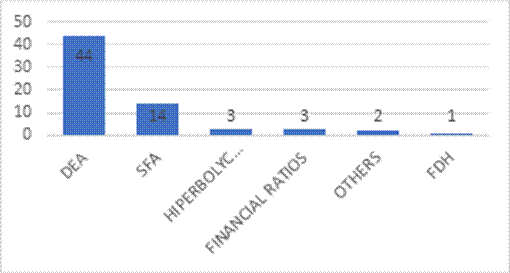
Figure 1. Efficiency estimation methodologies.
5.2. Parametric
The parametric approach, Stochastic Frontier Analysis (SFA) has a very strict requirement with respect to the distribution of inefficiencies. This approach assumes that inefficiencies follow a left-truncated (asymmetric) half-normal distribution and that random errors follow a standard (symmetric) normal distribution. Few researchers have proposed the SFA model in cooperative financial institutions.
A total of fourteen studies were found that employ parametric techniques to investigate efficiency in cooperative financial institutions: one in commercial banks, savings banks and cooperative banks (Behr, 2010). Two in microfinance institutions (Servin et al., 2012; Gebremichael and Gessesse, 2016). For example, the SFA is used by Aiello and Bonanno (2016) to evaluating the impact of local market conditions on the efficiency of small mutual cooperative banks. In addition, Bernini and Brighi (2018) use the SFA to investigate the extent to which branch network expansion affects cost efficiency. Servin et al. (2012) used SFA to assess technical efficiency between shareholder-owned and member-owned microfinance firms and intra-firms.
Parametric and non-parametric techniques have their own advantages and disadvantages. Over the years, it can be noted in the literature that there are not many applications of this technique in financial cooperative institutions; however, studies are more focused on nonparametric approaches, presenting advances in methodology as mentioned in the previous section.
Due to the complexity of financial transactions, in addition to the numerous variables to select "inputs" and "outputs", multiple currents of thought are used, such as: the production approach, the intermediation and income approach. These approaches are useful when assigning "inputs" and "outputs" for the analysis of efficiency in financial cooperatives.
One of them is the production approach proposed by Brown et al. (1999) that considers financial institutions as producers of financial services. We can observe this approach in studies of financial cooperatives by (Pille and Paradi, 2002; Martinez-Campillo et al., 2017). Following this production approach, Gonçalves Barros, Botelho da Costa Moraes, Pereira Salgado and Alves de Souza (2020) estimate efficiency in financial intermediation, referring to better prices for members in interest rates and cost efficiency, referring to the banking service of Brazil's credit unions, this translates into a greater share of service revenues.
The production approach is also applied in the joint evaluation of financial and social efficiency by Amersdorffer et al. (2015) and Sousa de Abreu et al. (2018) in financial cooperatives, as well as in microfinance institutions by Servin et al. (2012), Gebremichael and Gessesse (2016), Mohini M and Vilvanathan (2020). In this approach, several variables are estimated; including, physical capital and number of employees, which are defined as “input” variables, used to produce (deposits, loans and other assets) that are categorized as “output” variables. In addition, in this type of approach, deposits are considered an “input”.
Referring to the social approach, Amersdorffer et al. (2015) uses as “social inputs” (total expenditures) and as “social outputs” the social audit tool (SPI) which has 4 variables (targeting and outreach, adaptation and quality of services, economic benefits and social responsibility). On the other hand, San-José et al. (2020) consider “social inputs” (equity, total assets, deposits) as well as “social outputs” (loans to customers, number of employees, risk, social tax contribution), variables estimated in the evaluation of social efficiency in the transformation of savings banks in Spain into commercial banks. Continuing with this context Sousa de Abreu et al. (2018) considers the variables: (personnel expenses, administrative expenses and total assets) defined as “inputs”, while the variables: (credit volume, total deposits and profitability) defined as “outputs”. These variables were used in a joint evaluation of economic and social goals of Brazilian cooperatives.
Moreover, a study on MFIs in Vietnam, a variable a social is constructed focusing on two characteristics such as: breadth (number of poor clients reached) and depth (to what extent the poorest clients are reached), the latter characteristic being shaped by the average loan balance per borrower with the average annual income in the province(s) where the MFI operates and the annual per capita income of each Vietnamese province where MFIs operate (Lebovics et al., 2016).
From the above, we can mention that there are few studies on social efficiency and they lack comparability because they do not adhere to standardized “inputs” and “outputs”.
Additionally, an intermediation approach, also called asset approach, first proposed in depository financial institutions by Sealey and Lindley (1977), argues that the primary function of banks is to channel funds from savers to borrowers. Similarly, this intermediation approach was followed in the study of German cooperative banks by Lang and Welzel, 1996; Lang and Welzel, 1999. This approach treats cooperatives as intermediaries of financial services (Fukuyama et al., 1999; Esho, 2001; Colin Glass, Mc Killop and Quinn, 2014), therefore, in this approach “deposits” are considered as income-generating activities that fall on “loans” and “interest” paid to depositors, it is for this reason that deposits are considered as "inputs" rather than "outputs".
Within the intermediation approach, the value-added approach version, suggested by Berger and Humphrey (1992), considers that everything that adds value to a financial institution is defined as “outputs”, that is, the production of services (loans and deposits), these services incur costs of capital, labor and physical capital, are defined as “inputs” (Worthington, 1999; Battaglia et al., 2010; San-José et al., 2014; Bernini and Brighi, 2018; Campoverde Campoverde et al., 2019). Similarly, this dynamic occurs with the combination of the two approaches, the production and intermediation approach (Asawaruangpipop and Suwunnamek, 2014).
Following the intermediation approach aimed at the social aspect to which financial cooperatives are aligned. The variables considered for this purpose are credit and number of partners, because they generate added value to the interested parties. This means that the greater the benefits for stakeholders, the greater the social efficiency of an organization (San-José et al., 2014). Credits are part of the social functions that reflect the loans granted to families and companies, thus assisting the credit needs of individuals gives rise to social development. Furthermore, within this direction of social contribution, other variables are associated, such as: variable work that describes the number of employees. This variable is aligned with job creation. Likewise, taxes, which represents the money returned to society through the tax administration. Finally, risk and crisis also reflect social aspects (San -José et al., 2018).
The third approach is the income approach also called the operating approach, which defines interest income and other income as “outputs” and interest spent and operating expenses as "inputs" (Arora and Arora, 2019).
Currently, the three approaches (production, intermediation and income approach) using DEA, can be observed in the study by Dia et al. (2020) in evaluating the evolution of efficiency in 14 Canadian credit unions and the impact of the crisis.
More than one method has been used in the specification of “inputs” and “outputs” in several studies at the same time, more than two approaches in the same study, considerations that researchers take according to the estimation method chosen and the objectives pursued by cooperative financial institutions. In the literature, the intermediation approach is the one most documented by researchers.
7.1. Conclusions
The first question that guided our research was: What is the state of the art in the study of efficiency in financial cooperatives? The study allowed us to determine that due to the importance of the cooperative sector for its hybrid (economic-social) purpose in the financial industry, existing studies have highlighted different dimensions of cooperative efficiency. However, the scope of studies on cooperative financial efficiency has had little growth over the years. The 67 research studies were classified according to their objectives and 10 general topics were identified: ownership, social efficiency, crisis, risk, determinants, size, mergers and acquisitions, other objectives, methodologies, inputs-outputs. Finally, we propose possible lines of future research.
We can conclude that financial and social efficiency, as the purpose of our research is determined in two ways. Firstly, financial efficiency evaluates its financial resources through financial indicators or by using accounting variables. For example, ratios such as: Total Loans/Equity, Net Loan/Total Assets, Overhead/Total Assets, CAMEL, ROA. Also, variables such as: Deposits, credits, capital, assets, interest and others. In other words, the measurement of financial efficiency is carried out using these variables to establish a financial measure. This measurement is essential because although financial cooperatives are business entities, they do not pursue the maximization of return on capital, being efficient contributes to a maximization of resources as these are limited since they come from the savings of their members, resulting in generating enough income to cover their costs and the generation of surpluses that can be reinvested, achieving solvency while leading to the strengthening of its sustainability, competence, permanence, growth, and expansion.
Secondly, social efficiency is evaluated according to the social mission of financial cooperatives, which is the inclusion of the neediest in the financial system. The researchers have also included accounting variables for their analysis such as loans, capital, deposits, personnel expenses, number of members served and other factors such as size. These variables are aligned with the inclusion and the maximization of social benefits such as access to credit at better competitive interest rates, the possibility of saving that will serve as guarantees in financial activities required by members, expansion of financial cooperatives to reach more vulnerable sectors in the fight against poverty, and the reduction of unemployment by incorporating personnel to work in these entities. Likewise, financing for microentrepreneurs contributes to sources of employment and development.
Overall, social efficiency seeks to maximize resources for social purposes, however, the studies analyzed do not present standardized variables for their social evaluation and studies are scarce in these two measurements together (financial-social). It is also concluded that cooperatives, which are financially efficient, are not efficient in their social dimension or vice versa.
The second question of our research was: What methodologies are used in the evaluation of efficiency in financial cooperatives? We can conclude that the DEA method is the most used among researchers to evaluate both financial and social efficiency and under the employment of accounting variables and other factors such as: type of ownership, crisis, risk, determinants, size, mergers and acquisitions and other issues, which will be mentioned later.
DEA is a non-parametric linear programming technique used to determine how efficient a unit of production is relative to other homogeneous units, based on the relationship between inputs and outputs. The DEA as a method of evaluation of production units within the organizational environment, is a tool to assess organizational efficiency and performance, it helps to improve management decisions to optimize resources, monitor and evaluate the performance of the DMUs, identify good and bad results and improve results, achieving continuous improvement.
However, DEA as a non-parametric method also has its drawbacks. The results are sensitive to the selection of inputs and outputs, so it is necessary to analyze their relative importance before calculation. This method is also used in combination with other methods. A DEA-based performance assessment produces a similar view of well-being as a financial ratio analysis; although, a BSC-based DEA assessment produces a different assessment or complements it.
The third question of our research was: What variables or factors are used in the evaluation of efficiency in credit unions? Among the factors used are:
First, the type of ownership (Banks, NGOs, NBFIs and Cooperatives) influences efficiency. Cooperatives in terms of financial efficiency are less efficient than NGOs and NBFIs, this could be related to the dual nature of cooperatives where they pursue social and economic objectives through the dual linkage of members as owners and borrowers. It is also evident so far that cooperatives are less efficient than commercial banks; this could result because it is a different sector characterized by its democratic principles of governance and its leadership in retail banking by pursuing the social purpose. In addition to this, cooperatives with foreign ownership (resident foreign (Japan) members), credit unions affiliated with universities and cooperatives of members employed by private companies are also efficient in financial efficiency. That is, cooperatives that are not composed (members) of employees of state-owned enterprises, government enterprises, teachers, police officers, soldiers, hospital employees, employees of educational institutions, and public health employees. Finally, cooperatives that integrate MSMEs members.
We conclude that the crisis is a factor of interest in studies of the efficiency of financial cooperatives. Particularly in the Spanish economic crisis caused two recessions, between (2008–2010) and between (2011–2013). This factor was negative in the efficiency of Spanish credit unions in the years 2005-2013. On the other hand, Canadian credit unions in the years 2007-2009 were affected by management problems more than the crisis itself. The same applies to the Italian cooperative banks in the years 2006-2011. Therefore, we can mention that cooperatives have been resilient in times of crisis, this may be due to factors such as: urban concentration, size, internal financial risk management, regional location, countercyclical performance and increased credit to SMEs. Finally, we can mention that crises have been a time of interest to study the effect on the efficiency of these institutions, which have proven to be resilient in these times and invite further exploration during crisis and post-health and economic crisis caused by Covid-19.
Referring to the topic of determinants, the findings show that endogenous and exogenous determinants influence the financial efficiency of financial cooperatives. Firstly, referring to endogenous determinants, institutional quality is determined by levels of corruption, which affects efficiency. Likewise, bad loan risks decrease efficiency. Similarly, liquidity and solvency risks. As well as the CAMEL indicators, these reflect efficiency when there is less deterioration of assets and equity.
Second referring to exogenous determinants, competition, its geographical distance decreases efficiency, also other cooperatives that operate in the same geographical area and the sector (north or south), with efficiency in the southern sector, due to external risks (levels of crime and companies’ bankruptcies) that give rise to cooperatives that are located in this area to increase their prices, due to less competitive pressure and therefore greater efficiency in profits.
Finally, high levels of efficiency are associated as a determinant in the survival of financial cooperatives and constitutes a managerial management tool in the prediction of financial bankruptcies in these organizations (Fiordelisi and Mare, 2013).
Mentioning the issue of size, we can conclude that there is more evidence that the size (large) of financial cooperatives influences efficiency, in addition, these large organizations have economies of scale and tend to be more efficient not only economically but also, socially (Sousa de Abreu et al., 2018).
About mergers and acquisitions, we conclude that they have failed to increase efficiency. In addition, the factor that influences whether or not these processes take place is the smaller size of assets.
Within the other theme, we concluded that deposit mobilization, financial sustainability, credit granting system, regulatory reforms and partnership linkage have been topics of interest in the studies of efficiency in financial cooperatives.
We conclude that “input-outputs” are variables used to estimating financial and social efficiency. Different “input-output” approaches produce different efficiency results. Researchers have proposed several approaches, however, there is no consensus regarding the optimal “input-output” approaches, still, the intermediation approach, where “deposits” are considered as income-generating activities evidenced by “loans” and “interest” to depositors, is the most widely documented among researchers in defining “inputs and outputs”.
Our fourth research question was: What are the particularities of measuring efficiency in financial cooperatives compared to traditional banking?
Cooperatives have a key difference from traditional banking. The evaluation of efficiency in financial cooperatives is aligned with the ideology of partnership linkage in the provision of not-for-profit financial services, which is for their inherent economic-social purpose. For such reason efficiency is aligned with providing sustainable financial products and effectively serving the poor (Semaw Henock, 2019). While efficiency in traditional banking is aligned with shareholders and their focus on profit maximization, directed to their economic objectives (Radojicic et al., 2018; Belasri et al., 2020). It is in this sense that the measurement of efficiency in cooperatives cannot be measured in the same way as in banking (Belmonte Ureña and Plaza Úbeda, 2008), since they do not capture the advantageous conditions of cooperative members. For this reason, the measurement of efficiency in these entities should be measured under the condition of financial intermediation and banking services. On this basis, financial intermediation is directed to advantageous conditions for members, through the best interest rate prices for savings and borrowing members. In addition, the income obtained by the cooperatives is directed to capital and reserves, thus reducing the risk of their bankruptcy (Gonçalves et al., 2020).
The review of the literature on financial cooperative efficiency has identified and highlighted several areas of research, highlights trends in financial cooperatives that could be useful for managers, academics and policy makers to identify best practices and areas of concern in the financial cooperative system.
7.2. Future research
From the literature, several prospective directions for future research can be identified.
Nowadays it would now be interesting to assess the effect of geopolitical tensions on the financial and social efficiency of financial cooperatives.
Another line would be to determine whether cooperatives have been efficient in the COVID-19 and post-COVID economic and social crisis and to make a comparison with more financial institutions as a preventive measure for future risks.
An additional line would be to study the characteristics of corporate governance as determinants of efficiency. It would also be important to develop a defined social efficiency model to evaluate their performance in compliance with their social responsibility and cooperative principles. Moreover, another important line would be to measure the financial and social efficiency of financial cooperatives through the frontier efficiency method in combination with traditional inputs and outputs that allow the identification of significant variables and their effect on efficiency. This, with the use of Social Performance Indicators (Amersdorffer el at., 2015), Environmental Social and Corporate Governance Performance Indicators (Sustainable Value, SV) in their measurement. It would also be interesting to make a financial and social evaluation with the application of the DEA method and the Stochastic Non-Smooth Envelopment of Z-variables Data (StoNEZD) approach (Cordero, Polo and Santín, 2020) to determine predictions regarding efficiency, to serve as a management tool for managers. Likewise, DEA with the benefit of the doubt (BoD)approach (Aparicio et al., 2020) not only to evaluate the efficiency but also the effectiveness of financial cooperatives.
Since larger cooperatives are more efficient. Therefore, they exhibit economies of scale; a possible line of research is to explain why M&A does not improve efficiency despite increasing size.
Another potential research topic could be the multi-country evaluation of efficiency in financial cooperatives with the application of social and financial risk factors in the different methodologies of frontier efficiency, in order to allow the best management and governance policy tools. A multi-country comparison of economic and social efficiency in cooperatives vs. commercial banks according to their regulations. Finally, a financial and social evaluation by sector where credit unions operate.
The authors declare no conflict of interest.
In accordance with the CRediT criteria (CRediT –Contributor Roles Taxonomy (niso.org)) as set out in the journal's authorship policy (Authorship Policy | REVESCO. Revista de Estudios Cooperativos (ucm.es)), both authors declare that they have contributed to the drafting of the article, with Fernando Polo-Garrido mainly contributing to the conceptualization, design of methodology, supervision and writing (review and editing) and with Diana Evelyn Vargas Ulloa mainly contributing to the data curation, investigation and writing (original draft).
Fernando Polo-Garrido gratefully acknowledges financial support from Consellería d´Educació, Universitats i Ocupació, Generalitat Valenciana CIAICO/2022/075 (Spain).
Agostino, M., Ruberto, S., & Trivieri, F. (2023). The role of local institutions in cooperative banks’ efficiency. The case of Italy. International Review of Economics and Finance, 84(April 2022), 84–103. https://doi.org/10.1016/j.iref.2022.11.001.
Aiello, F., & Bonanno, G. (2016). Bank efficiency and local market conditions: Evidence from Italy. Journal of Economics and Business, 83, 70–90. https://doi.org/10.1016/j.jeconbus.2015.09.002.
Al-Awlaqi, M. A., & Mohamed Aamer, A. (2019). Financial and social efficiency in the Yemen microfinance institutions. International Journal of Islamic and Middle Eastern Finance and Management, 12(3), 322–345. https://doi.org/10.1108/IMEFM-10-2017-0276.
Aldaz Ibáñez, N.; Millán Gómez, J.S.; Moltó Aribau, M.; Escardíbul Ferrá, B.; Cos Sánchez, P. (2021) Análisis de eficiencia no paramétrica de las cooperativas agroalimentarias españolas. REVESCO. Revista de Estudios Cooperativos, vol. 139, e77446. https://dx.doi.org/10.5209/reve.77446.
Algeri, C., Anselin, L., Forgione, A. F., & Migliardo, C. (2022). Spatial dependence in the technical efficiency of local banks. Papers in Regional Science, 101(3), 685–716. https://doi.org/10.1111/pirs.12669.
Almehdawe, E., Khan, S., Lamsal, M., & Poirier, A. (2020). Factors affecting Canadian credit unions’ financial performance. Agricultural Finance Review, 81(1), 51–75. https://doi.org/10.1108/AFR-06-2019-0065.
Álvarez, J. F., Bouchard, M. J., & Marcuello, C. (2022). Economía Social y covid-19: Una mirada internacional. CIRIEC-España, Revista de Economía Publica, Social y Cooperativa, 104, 203–231. https://doi.org/10.7203/CIRIEC-E.104.21855.
Amersdorffer, F., Buchenrieder, G., Bokusheva, R., & Wolz, A. (2015). Efficiency in microfinance: financial and social performance of agricultural credit cooperatives in Bulgaria. Journal of the Operational Research Society, 66(1), 57–65. https://doi.org/10.1057/jors.2013.162.
Amoah, B., Ohene-Asare, K., Bokpin, G. A., & Aboagye, A. Q. Q. (2018). Technical efficiency: the pathway to credit union cost efficiency in Ghana. Managerial Finance, 44(11), 1292–1310. https://doi.org/10.1108/MF-10-2017-0431.
Aparicio, J., Perelman, S., & Santín, D. (2020). Comparing the evolution of productivity and performance gaps in education systems through DEA: an application to Latin American countries. In Operational Research (Vol. 22, Issue 2). Springer Berlin Heidelberg. https://doi.org/10.1007/s12351-020-00578-2.
Arora, P., & Arora, H. (2019). Efficiency of thrift agents of small urban borrowers: the case of scheduled urban cooperative banks (SUCBs) in India. International Journal of Indian Culture and Business Management, 19(4), 434. https://doi.org/10.1504/ijicbm.2019.104787.
Arroyo Esteban, S., Urquía-Grande, E., Martínez de Silva, A., & Pérez-Estébanez, R. (2022). Big Data, Accounting and International Development: Trends and challenges. Cuadernos de Gestion, 22(1), 193–213. https://doi.org/10.5295/CDG.211513SA.
Asawaruangpipop, P., & Suwunnamek, O. (2014). Analysis on Savings and Credit Cooperatives Efficiency in Thailand: A Data Envelopment Analysis (DEA) Approach. Research Journal of Business Management, 8(3), 242–253. https://doi.org/10.3923/rjbm.2014.242.253.
Barra, C., & Ruggiero, N. (2021). Firm innovation and local bank efficiency in Italy: Does the type of bank matter? Annals of Public and Cooperative Economics, July, 1–46. https://doi.org/10.1111/apce.12345.
Battaglia, F., Farina, V., Fiordelisi, F., & Ricci, O. (2010). The efficiency of cooperative banks: The impact of environmental economic conditions. Applied Financial Economics, 20(17), 1363–1376. https://doi.org/10.1080/09603107.2010.491442.
Behr, A. (2010). Quantile regression for robust bank efficiency score estimation. European Journal of Operational Research, 200(2), 568–581. https://doi.org/10.1016/j.ejor.2008.12.033.
Belasri, S., Gomes, M., & Pijourlet, G. (2020). Corporate social responsibility and bank efficiency. Journal of Multinational Financial Management, 54, 100612. https://doi.org/10.1016/j.mulfin.2020.100612.
Belmonte Ureña, L. J., & Plaza Úbeda, J. A. (2008). Análisis de la eficiencia en las cooperativas de crédito en España. Una propuesta metodológica basada en el análisis envolvente de datos (DEA). CIRIEC-España, Revista de Economía Pública, Social y Cooperativa, 63, 113–133. https://www.redalyc.org/pdf/174/17412307005.pdf.
Berger, A. N., & Humphrey, D. B. (1992). “Measurement and Efficiency Issues in Commercial Banking,” NBER Chapters, in: Output Measurement in the Service Sectors. National Bureau of Economic Research, January, 245–300. http://ideas.repec.org/h/nbr/nberch/7237.html.
Bernini, C., & Brighi, P. (2018). Bank branches expansion, efficiency and local economic growth. Regional Studies, 52(10), 1332–1345. https://doi.org/10.1080/00343404.2017.1380304.
Bhatia, V., Basu, S., Mitra, S. K., & Dash, P. (2018). A review of bank efficiency and productivity. Opsearch, 55(3–4), 557–600. https://doi.org/10.1007/s12597-018-0332-2.
Brown, R., Brown, R., & O’Connor, I. (1999). Efficiency, bond of association and exit patterns in credit unions: Australian evidence*. Annals of Public and Cooperative Economics, 70(1), 5–23. https://doi.org/10.1111/1467-8292.00097.
Burgstaller, J. (2020). Retail-bank efficiency: Nonstandard goals and environmental determinants. Annals of Public and Cooperative Economics, 91(2), 269–301. https://doi.org/10.1111/apce.12270.
Campoverde Campoverde, J. A., Romero Galarza, C. A., & Borenstein, D. (2019). Evaluación de eficiencia de cooperativas de ahorro y crédito en Ecuador: Aplicación del modelo Análisis Envolvente de Datos DEA. Contaduría y Administración, 64(1), 1–19. https://doi.org/10.22201/fca.24488410e.2018.1449.
Charnes, A., Cooper, W., & Rhodes, E. (1978). Measuring the efficiency of decision making units. European Journal of Operational Research, 2(6), 429–444. https://doi.org/10.1016/0377-2217(78)90138-8.
Chen, T., Chen, C.-B., & Peng, S.-Y. (2008). Firm operation performance analysis using data envelopment analysis and balanced scorecard: A case study of a credit cooperative bank. International Journal of Productivity and Performance Management, 57(7), 523–539. https://doi.org/10.1108/17410400810904010.
Chongrun, W., & Kai, W. (2017). The Analysis on the Differences and Influencing Factors of DEA Business Efficiency of Rural Credit Cooperatives. Advances in Social Science, Education and Humanities Research (ASSEHR), 95(Iceemr), 318–322.
Coccorese, P., & Ferri, G. (2020). Are mergers among cooperative banks worth a dime? Evidence on efficiency effects of M&As in Italy. Economic Modelling, 84(March 2018), 147–164. https://doi.org/10.1016/j.econmod.2019.04.002.
Colin Glass, J., McKillop, D. G., & Quinn, B. (2014). Modelling the Performance of Irish Credit Unions, 2002 to 2010. Financial Accountability and Management, 30(4), 430–453. https://doi.org/10.1111/faam.12041.
Colin Glass, J., McKillop, D. G., Quinn, B., & Wilson, J. (2014). Cooperative bank efficiency in Japan: A parametric distance function analysis. European Journal of Finance, 20(3), 291–317. https://doi.org/10.1080/1351847X.2012.698993.
Cordero, J. M., Polo, C., & Santín, D. (2020). Assessment of new methods for incorporating contextual variables into efficiency measures: a Monte Carlo simulation. Operational Research, 20(4), 2245–2265. https://doi.org/10.1007/s12351-018-0413-2.
Cordero, J. M., Santín, D., & Sicilia, G. (2015). Testing the accuracy of DEA estimates under endogeneity through a Monte Carlo simulation. European Journal of Operational Research, 244(2), 511–518. https://doi.org/10.1016/j.ejor.2015.01.015.
Da Silva, T. P., Leite, M., Guse, J. C., & Gollo, V. (2017). Financial and economic performance of major Brazilian credit cooperatives. Contaduría y Administración, 62, 1442–1459. https://doi.org/10.1016/j.cya.2017.05.006.
Dia, M., Takouda, P. M., & Golmohammadi, A. (2020). Assessing the performance of Canadian credit unions using a three-stage network bootstrap DEA. Annals of Operations Research, 5, 1–33. https://doi.org/10.1007/s10479-020-03612-w.
Duguma, G. J., & Han, J. (2020). Effect of deposit mobilization on the technical efficiency of rural saving and credit cooperatives: Evidence from Ethiopia. Annals of Public and Cooperative Economics, July, 1–27. https://doi.org/10.1111/apce.12296.
Esho, N. (2001). The determinants of cost efficiency in cooperative financial institutions: Australian evidence. Journal of Banking and Finance, 25(5), 941–964. https://doi.org/10.1016/S0378-4266(00)00104-7.
Farrell, M. J. (1957). The Measurement of Productive Efficiency. Journal of the Royal Statistical Society. Series A (General), 120(3), 253–290. https://doi.org/10.2307/2343100.
Fiordelisi, F., & Mare, D. S. (2013). Probability of default and efficiency in cooperative banking. Journal of International Financial Markets, Institutions and Money, 26(1), 30–45. https://doi.org/10.1016/j.intfin.2013.03.003.
Frank, T., Mbabazize, M., & Shukla, J. (2015). Savings And Credit Cooperatives (Sacco’s) Services’ Terms and Members’ Economic Development in Rwanda: A Case Study of Zigama Sacco Ltd. Journal of Chemical Information and Modeling, 3(2), 1–56.
Fried, H.O; Lovell, C.A.K; Turner, J. (1996). An analysis of the performance of University-Affiliated Credit Unions. Computers Ops Res, 23(4), 375–384.
Fukuyama, H., Guerra, R., & Weber, W. L. (1999). Efficiency and ownership: Evidence from japanese credit cooperatives. Journal of Economics and Business, 51(6), 473–487. https://doi.org/10.1016/s0148-6195(99)00020-x.
Garden, K. A., & Ralston, D. E. (1999). The x-efficiency and allocative efficiency effects of credit union mergers. Journal of International Financial Markets, Institutions and Money, 9(3), 285–301. https://doi.org/10.1016/S1042-4431(99)00012-8.
Gautam, T., Srivastava, A., & Jain, S. (2022). Data Envelopment Analysis based Efficiency Measurement of Urban Cooperative Banks. 2022 IEEE Delhi Section Conference, DELCON 2022, 1–7. https://doi.org/10.1109/DELCON54057.2022.9752972.
Gebremichael, Z., & Gessesse, T. (2016). Technical efficiency of Microfinance Institutions (MFIs) Does ownership matter? Evidence from African MFIs. International Journal of Development Issues, 15(3), 224–239. https://doi.org/10.1108/IJDI-04-2016-0026.
Gil-Lamata, M., & Latorre-Martínez, M. P. (2022). The Circular Economy and Sustainability: A Systematic Literature Review. Cuadernos de Gestion, 22(1), 129–142. https://doi.org/10.5295/CDG.211492MG.
Gonçalves Barros, M., Botelho da Costa Moraes, M., Pereira Salgado, A., & Alves de Souza, M. A. (2020). Efficiency of credit unions in Brazil: an analysis of the evolution in financial intermediation and banking service. RAUSP Management Journal, 55(3), 289–308. https://doi.org/10.1108/RAUSP-06-2018-0029.
Gregoriou, G., Messier, J., & Sedzro, K. (2004). Assessing the Relative Efficiency of Credit Unionbranches using Data Envelopment Analysis. Infor, 42(4), 281–297. https://doi.org/10.1080/03155986.2004.11732709.
Khafagy, A. (2021). The economics of financial cooperatives: Income distribution, political economy and regulation. In The Economics of Financial Cooperatives: Income Distribution, Political Economy and Regulation (Issue September). https://doi.org/10.4324/9780429342196.
Lampe, H. W., & Hilgers, D. (2015). Trajectories of efficiency measurement: A bibliometric analysis of DEA and SFA. European Journal of Operational Research, 240(1), 1–21. https://doi.org/10.1016/j.ejor.2014.04.041.
Lang, G., & Welzel, P. (1996). Efficiency and technical progress in banking: Empirical results for a panel of German cooperative banks. Journal of Banking and Finance, 20(6), 1003–1023. https://doi.org/10.1016/0378-4266(95)00040-2.
Lang, G., & Welzel, P. (1999). Mergers among German Cooperative Banks: A Panel-based Stochastic Frontier Analysis. Small Business Economics, 13(4), 273–286. https://doi.org/10.1023/A:1008130918565.
Lebovics, M., Hermes, N., & Hudon, M. (2016). Are Financial and Social Efficiency Mutually Exclusive? A Case Study of Vietnamese Microfinance Institutions. Annals of Public and Cooperative Economics, 87(1), 55–77. https://doi.org/10.1111/apce.12085.
López-Sánchez, P., Urquía-Grande, E., del Campo, C., & Cancer, A. L. (2022). Delving into the Determinants of Default Risk in Savings Groups: Empirical Evidence from Ecuador. European Journal of Development Research, 34(6), 2625–2650. https://doi.org/10.1057/s41287-021-00480-3.
Makinen, M., & Jones, D. C. (2015). Comparative efficiency between cooperative, Savings and Commercial Banks in Europe using the frontier approach: Annals of Public and Cooperative Economics CIRIEC, 0(0), 1–20. https://doi.org/10.1111/apce.12060.
Malhotra, R., Malhotra, D. K., & Lafond, C. A. (2009). Analysing financial services industry using data envelopment analysis. International Journal of Applied Management Science, 1(3), 217–246. https://doi.org/10.1504/IJAMS.2009.023703.
Manetti, G., & Bagnoli, L. (2013). Mutual and social efficiency of italian co-operative banks: An empirical analysis. Annals of Public and Cooperative Economics, 84(3), 289–308. https://doi.org/10.1111/apce.12015.
Martínez-Campillo, A., & Fernandez-Santos, Y. (2016). What About the Social Efficiency in Credit. Social Indicators Research, 131(2), 607–629. https://doi.org/10.1007/s11205-016-1277-6.
Martínez-Campillo, A., Fernández-Santos, Y., & Sierra-Fernández, M. del P. (2017). Eficiencia técnica en las cooperativas de crédito españolas: una aproximación al impacto de la crisis. Spanish Journal of Finance and Accounting/Revista Espanola de Financiacion y Contabilidad, 46(4), 484–506. https://doi.org/10.1080/02102412.2017.1288951.
Martínez-Campillo, A., Wijesiri, M., & Wanke, P. (2018). Evaluating the Double Bottom-Line of Social Banking in an Emerging Country: How Efficient are Public Banks in Supporting Priority and Non-priority Sectors in India? Journal of Business Ethics, 162(2), 399–420. https://doi.org/10.1007/s10551-018-3974-3.
Martins, L. G. R., Steiner, M. T. A., Wilhem, V. E., Steiner Neto, P. J., & dos Santos, B. S. (2018). Paraná’s Credit Unions: an analysis of their efficiency and productivity change. Ingeniería e Investigación, 38(3), 59–67. http://dx.doi.org/10.15446/ing.investig.v38n3.68892.
Massaro, M., Dumay, J., & Guthrie, J. (2016). On the shoulders of giants: undertaking a structured literature review in accounting. Accounting, Auditing and Accountability Journal, 29(5), 767–801. https://doi.org/10.1108/AAAJ-01-2015-1939.
Mavi, R. K., Makui, A., Fazli, S., & Alinezhad, A. (2010). A forecasting method in data envelopment analysis with group decision making. International Journal of Applied Management Science, 2(2), 152–168. https://doi.org/10.1504/IJAMS.2010.031084.
Mckillop, D., French, D., Quinn, B., Sobiech, A. L., & Wilson, J. O. S. (2020). Cooperative financial institutions: A review of the literature. International Review of Financial Analysis, 71(December 2019), 3–11. https://doi.org/10.1016/j.irfa.2020.101520.
Mckillop, D., & Wilson, J. O. S. (2011). Credit unions: A Theoretical and Empirical Overview. Financial Markets, Institutions and Instruments, 20(3), 79–123. https://doi.org/10.1111/j.1468-0416.2011.00166.x.
Mohini M, S., & Vilvanathan, L. (2020). Efficiency assessment of microfinance institutions: using DEA with weighted Russell directional distance model. Benchmarking: An International Journal, 28(3), 769-791(23). https://doi.org/10.1108/BIJ-06-2020-0288.
Nashihin, M., & Harahap, L. (2014). The Analyis of the Efficiency of BPR-S: Production Function Approach Vs Financial Ratios Approach. Procedia - Social and Behavioral Sciences, 115 (2013), 188–197. https://doi.org/10.1016/j.sbspro.2014.02.427.
Ory, J. N., & Lemzeri, Y. (2012). Efficiency and hybridization in cooperative banking: The French case. Annals of Public and Cooperative Economics, 83(2), 215–250. https://doi.org/10.1111/j.1467-8292.2012.00462.x.
Palomo Zurdo, R. J., & Sanchis Palacio, J. R. (2010). Effects of the mergers in the banking concentration and efficiency. The case of the cooperatives banks and the challenges of the financial crisis. Revista Española de Financiación y Contabilidad, 39(146), 289–319. https://doi.org/10.1080/02102412.2010.10779683.
Pille, P., & Paradi, J. C. (2002). Financial performance analysis of Ontario (Canada) Credit Unions: An application of DEA in the regulatory environment. European Journal of Operational Research, 139(2), 339–350. https://doi.org/10.1016/S0377-2217(01)00359-9.
Piot-Lepetit, I., & Nzongang, J. (2014). Financial sustainability and poverty outreach within a network of village banks in Cameroon: A multi-DEA approach. European Journal of Operational Research, 234(1), 319–330. https://doi.org/10.1016/j.ejor.2013.10.004.
Porter, P. K., & Scully, G. W. (1987). Economic Efficiency in Cooperatives. The Journal of Law and Economics, 30(2), 489–512. https://doi.org/10.1086/467146.
Purmiyati, A., Handoyo, R. D., & Wisudanto. (2022). Technical efficiency analysis: Management factor as determinants of saving and credit cooperatives’ health. Journal of Co-Operative Organization and Management, 10(2), 100186. https://doi.org/10.1016/j.jcom.2022.100186.
Radojicic, M., Savic, G., & Jeremic, V. (2018). Measuring the efficiency of banks: The bootstrapped i-distance gar dea approach. Technological and Economic Development of Economy, 24(4), 1581–1605. https://doi.org/10.3846/tede.2018.3699.
Ruiz Jiménez, C. M., Hernández Ortiz, J. M., & García Martí, E. (2006). Estado actual de la investigación sobre sociedades cooperativas agrarias en España. CIRIEC - España. Revista de Economía Pública, Social y Cooperativa, 56, 65–86.
San-Jose, L., Retolaza, J. L., & Lamarque, E. (2018). The social efficiency for sustainability: European cooperative banking analysis. Sustainability, 10(9). https://doi.org/10.3390/su10093271.
San-Jose, L., Retolaza, J. L., & Pruñonosa, J. T. (2020). Social efficiency in savings banks transformed into commercial banks in Spain. Trimestre Económico, 87(347), 759–787. https://doi.org/10.20430/ETE.V87I347.882.
San-Jose, L., Retolaza, J. L., & Torres Pruñonosa, J. (2014). Efficiency in Spanish banking: A multistakeholder approach analysis. Journal of International Financial Markets, Institutions and Money, 32(1), 240–255. https://doi.org/10.1016/j.intfin.2014.06.005.
Sanchis Palacio, J. R., & Melián Navarro, A. (2009). Yield and Efficiency of the Financial Organizations of Social Economy in Spain. Revista Venezolana de Gerencia, 24–41. https://doi.org/10.31876/revista.v14i45.10520.
Santín, D., & Sicilia, G. (2015). Measuring the efficiency of public schools in Uruguay: Main drivers and policy implications. Latin American Economic Review, 24(5), 1–28. https://doi.org/10.1007/s40503-015-0019-5.
Santín, D., & Sicilia, G. (2017). Using DEA for measuring teachers’ performance and the impact on students’ outcomes: evidence for Spain. Journal of Productivity Analysis, 49(1), 1–15. https://doi.org/10.1007/s11123-017-0517-3.
Sealey, C., & Lindley, J. T. (1977). Inputs, Outputs, and Theory of Production and Cost at Depository Financial Institutions. The Journal of Finance, XXXII (4), 1251–1266.
Semaw Henock, M. (2019). Financial sustainability and outreach performance of saving and credit cooperatives: The case of Eastern Ethiopia. Asia Pacific Management Review, 24(1), 1–9. https://doi.org/10.1016/j.apmrv.2018.08.001.
Servin, R., Lensink, R., & van den Berg, M. (2012). Ownership and technical efficiency of microfinance institutions: Empirical evidence from Latin America. Journal of Banking and Finance, 36(7), 2136–2144. https://doi.org/10.1016/j.jbankfin.2012.03.018.
Sousa de Abreu, E., Herbert, K., Medeiros, L., de Araújo Neto, L. M., & Peng, Y. (2018). Efficiency of the Brazilian Credit Unions: A Joint Evaluation of Economic and Social Goals. Latin American Business Review, 19(2), 107–129. https://doi.org/10.1080/10978526.2018.1479640.
Stechemesser, K., & Guenther, E. (2012). Carbon accounting: A systematic literature review. Journal of Cleaner Production, 36, 17–38. https://doi.org/10.1016/j.jclepro.2012.02.021.
Torres-Inga, C. S., Velasco-Heras, C., Aguirre-De Juana, A. J., Guevara-Viera, G. E., & Guevara-Viera, R. V. (2022). Technical Efficiency’s Nonparametric Analysis of Ecuadorian Saving and Credit Cooperatives before and during the Pandemic. Economies, 10(4), 1–15. https://doi.org/10.3390/economies10040082.
Vaquero
García, A., Bastida Domínguez,
M., & Vázquez Taín, M. Á. (2022). La Economía Social como instrumento para
la recuperación económica. Propuestas para afrontar la crisis derivada de la
COVID-19. 33°
Congreso Internacional del CIRIEC, 978-84-122791-6–0, 1–29.
Wheelock, D. C., & Wilson, P. W. (2013). The evolution of cost-productivity and efficiency among US credit unions. Journal of Banking and Finance, 37(1), 75–88. https://doi.org/10.1016/j.jbankfin.2012.08.003.
Wijesiri, M., Martínez-Campillo, A., & Wanke, P. (2017). Is there a trade-off between social and financial performance of public commercial banks in India? A multi-activity DEA model with shared inputs and undesirable outputs. Review of Managerial Science, 13(2), 417–442. https://doi.org/10.1007/s11846-017-0255-y.
Wijesiri, M., Viganò, L., & Meoli, M. (2015). Efficiency of microfinance institutions in Sri Lanka: A two-stage double bootstrap DEA approach. Economic Modelling, 47, 74–83. https://doi.org/10.1016/j.econmod.2015.02.016.
Worthington, A. C. (1999). Measuring technical efficiency in Australian credit unions. Manchester School, 67(2), 231–248. https://doi.org/10.1111/1467-9957.00144.
Worthington, A. C. (2001). Efficiency in Pre-Merger and Post-Merger Non-Bank Financial Institutions. Managerial and Decision Economics, 22(8), 439–452. https://doi.org/10.1002/mde.1033.
Worthington, A. C. (2010). Frontier efficiency measurement in deposit-taking financial mutuals: A review of techniques, applications, and future research directions. Annals of Public and Cooperative Economics, 81(1), 39–75. https://doi.org/10.1111/j.1467-8292.2009.00405.x.
Xiong, X., Tian, J., & Ruan, H. (2011). A DEA-model evaluation of the efficiency of peasant household credit investigation system in rural credit cooperatives: A positive research in Hubei Province, China. China Agricultural Economic Review, 3(1), 54–66. https://doi.org/10.1108/17561371111103543.
Yamori, N., Harimaya, K., & Tomimura, K. (2017a). Corporate governance structure and efficiencies of cooperative banks. International Journal of Finance and Economics, 22(4), 368–378. https://doi.org/10.1002/ijfe.1593.
Yamori, N., Harimaya, K., & Tomimura, K. (2017b). The efficiency of Japanese financial cooperatives: An application of parametric distance functions. Journal of Economics and Business, 94, 43–53. https://doi.org/10.1016/j.jeconbus.2017.09.001.